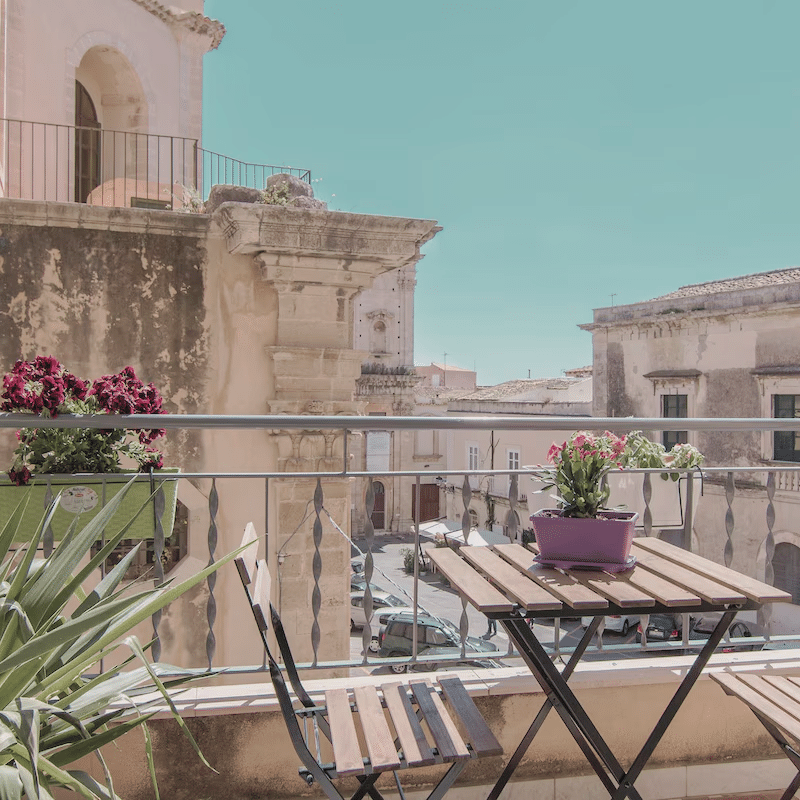
A passeggiata, or evening walk, around the perimeter of Ortigia reveals many notable structures and stories. Start from the Parco Letterario Elio Vittorini, on the eastern side, and head clockwise.
We particularly liked the “Spiaggia Diana nel Forte” This little beach gem is incredible, so bring your swimmers along.
As waves crash against the rocks below the sea wall, you’ll pass crenellated lookout points and the chiselled facade of the 17th-century Chiesa dello Spirito Santo, before finding yourself in the palm-planted gardens of the 13th-century Castello Maniace.
Continuing up the western side leads you to the spot where the goddess Artemis is said to have transformed a nymph into a natural spring — the Arethusa Fountain — and then to another haven of liquids: an outdoor seaside bar called Mikatú – A bright orange Aperol spritz is well worth the “trek” backwards. But it’s actually a wine bar, so try some wine instead.
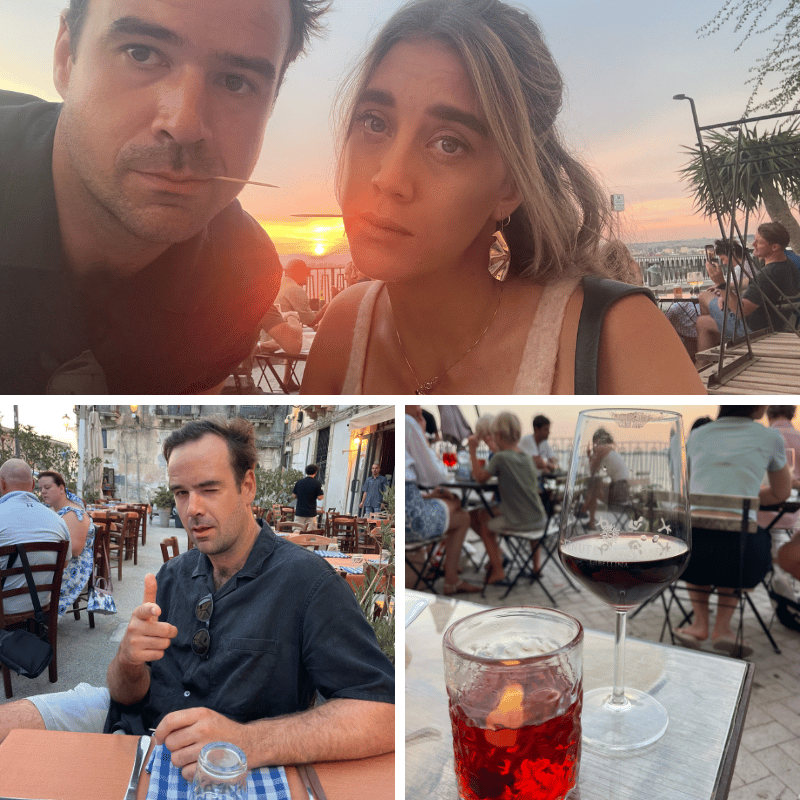
Also a spectacular place to view the sunset!
I Castellani isn’t your typical fancy restaurant. It’s more like having dinner at a cool relative’s place in Sicily. The vibe is comfy and casual, with furniture that’s been given a fresh lease on life. There is n old Nonna in charge of the restaurant and you get the feeling you are just over at hers for dinner.
Forget about fancy menus and tiny portions. This spot is all about hearty Sicilian food made with fresh, local ingredients. Think plump tomatoes, fresh pasta, and perfectly grilled fish caught just that day.
The bar called Boats, name notwithstanding does not have sea views. It has something far rarer: a view over the ruins of the roughly 2,500-year-old Temple of Apollo. Lit by candles and decorated with impeccable retro-vintage finds, the cavernous, nautical-themed establishment also has multiple turntables, an impressive funk-soul vinyl collection and an inspired cocktail card with concoctions like The Flaming Zone (Cynar artichoke liqueur, Campari, whiskey, mezcal and bitters). A bit touristic – but still good fun.
The number of Madonnas per square meter in the Galleria Regionale di Palazzo Bellomo — dedicated mostly to medieval, Renaissance and Baroque art — must surely approach record status. Madonnas for days.
There she is in Gothic mode, but certainly, her most stunning rendition comes from the hand of Antonello da Messina. His 15th-century painting “Annunciation,” depicting Mary visited by an angel, is a masterwork of powerful colour, exquisite detail and beatific light. Admission, 8 euros.
Sicily’s horn of plenty spills out in a tide of colours, shapes and smells at Ortigia’s outdoor market. Walking down the lively, crowded corridor of storefronts, stalls and sidewalk tables, you get a vocabulary lesson and gastronomic tour all in one: purple-green carciofi (artichokes), orange zucche (pumpkins), brown mandorle (almonds), black barrette di cioccolato (chocolate bars) from Modica.
But mostly you find freshly hooked and netted fish, including seppie (cuttlefish) and shiny green-black sgombro (mackerel). Breads, nuts, spices and cheeses round out the mix. Around the corner, a trinket market awaits.
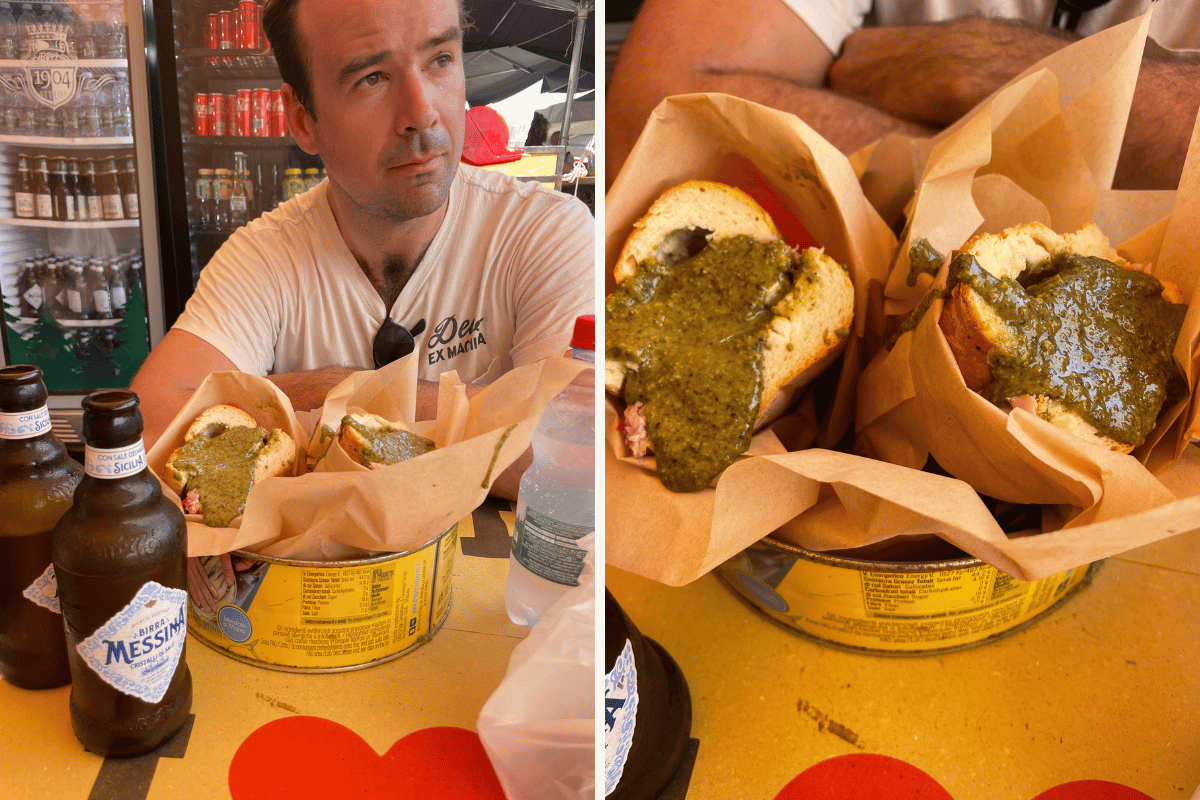
Then… You must eat at the famous sandwich place – Caseificio Borderi! Delicious but huge sandwhiches, so sharing is 100% caring for your waist line.
Having escaped from prison in Malta, the bad-boy artist (and accused murderer) arrived in Syracuse in 1608 and scored a commission to paint “The Burial of St. Lucia,” which today hangs in the Chiesa di Santa Lucia alla Badia (free admission). Lucia obviously holds a special place in Swedes hearts, so worth checking out.
Dominated by sombre blacks and browns, the canvas depicts the corpse of Syracuse’s patron saint (the only horizontal element) mourned by a priest in a blood-red scarf (the only splash of bright colour) and a crowd of onlookers.
Across the stately Piazza del Duomo stands the cathedral (admission 2 euros), whose architecture and design elements form a survey of Syracuse’s history, from the ornately chiselled facade (Baroque) to the kaleidoscopic marble floor (Renaissance) to the soaring stone pillars integrated into the walls (remnants of a 480 B.C. temple to Athena).
You need to take a guided tour, it’s not pricey but its super unique. Truly something you shouldn’t miss! It’s called Bagno ebraico – Mikveh, and is as old as the city but discovered in the late 80s.
Sicilia in Tavola is a hidden gem in Ortigia serving up some seriously delicious Sicilian food! Forget about the crowds and overpriced tourist fare, this place is all about fresh, local ingredients and friendly service.
If you’re a seafood lover, this is your spot. Their menu boasts all sorts of fresh catches straight from the Mediterranean, perfect for a light and flavourful lunch. For a heartier option, you gotta try their pasta alla Norma, a classic Sicilian dish with eggplant, ricotta cheese, and tomato sauce. And no Sicilian meal is complete without dessert, so make sure to save room for their cannoli or ravioli (sweet ravioli!)
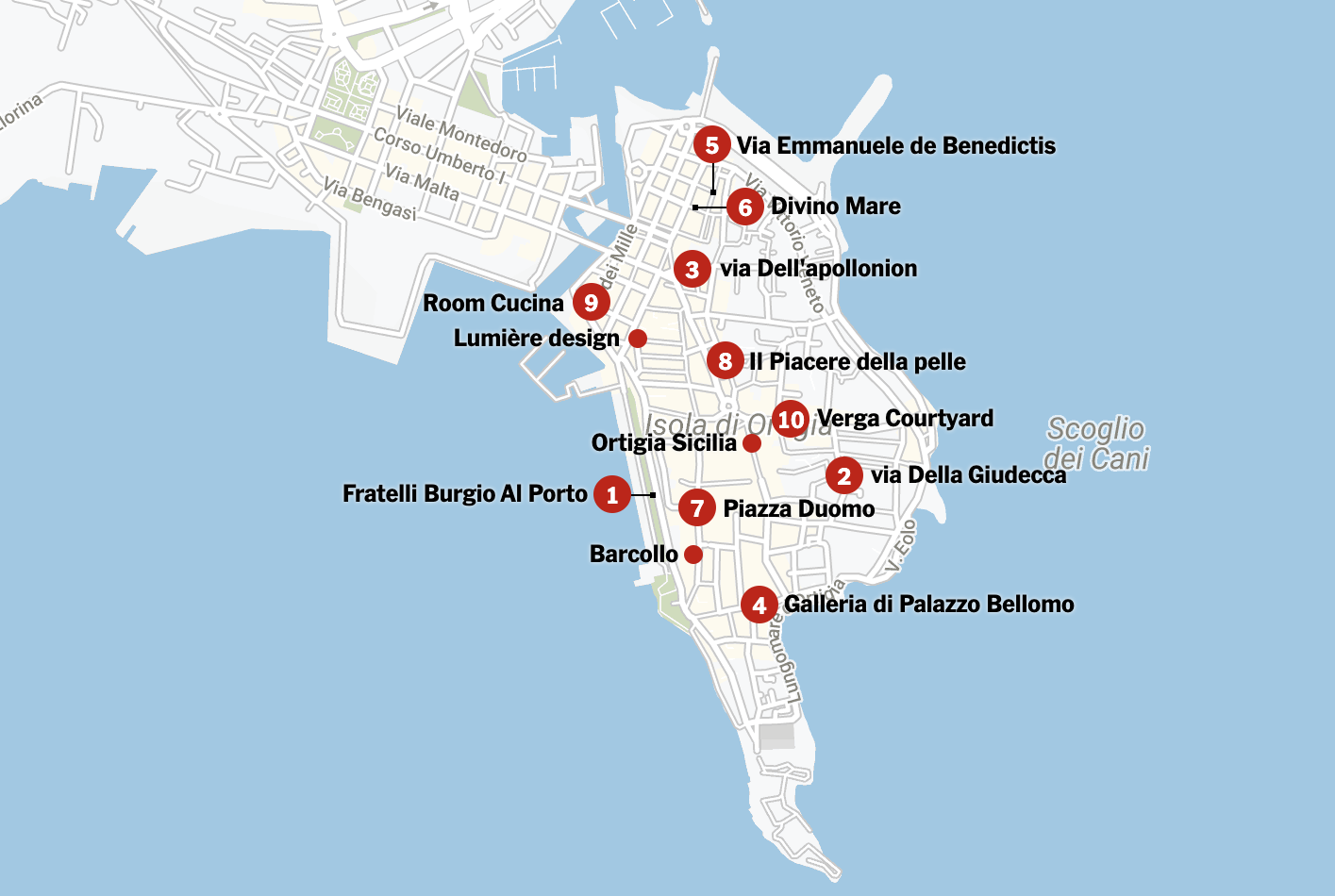
You practically need a Campari detector to find Ortigia’s other top bars, which are hidden away. Outfitted with antique furniture and an upright piano, Cortile Verga surrounds a courtyard filled with white marble tables, offering both indoor and outdoor space to enjoy a mild I.P.A. by Sicily’s Vittoria brewery or the expert Italian-Mexican mix of a Malinche cocktail. Then slip into the candlelit, palm-planted courtyard of Barcollo, a chic and sultry lounge offering fruity drinks like the Ortigia Mule.
The best thing about Sicily is arguably the pastries. Ryan loves cannolis, you will too – swing by Viola Bakery and pick up some. And as it’s the am you drink milk coffee, after lunch and dinner is espresso.
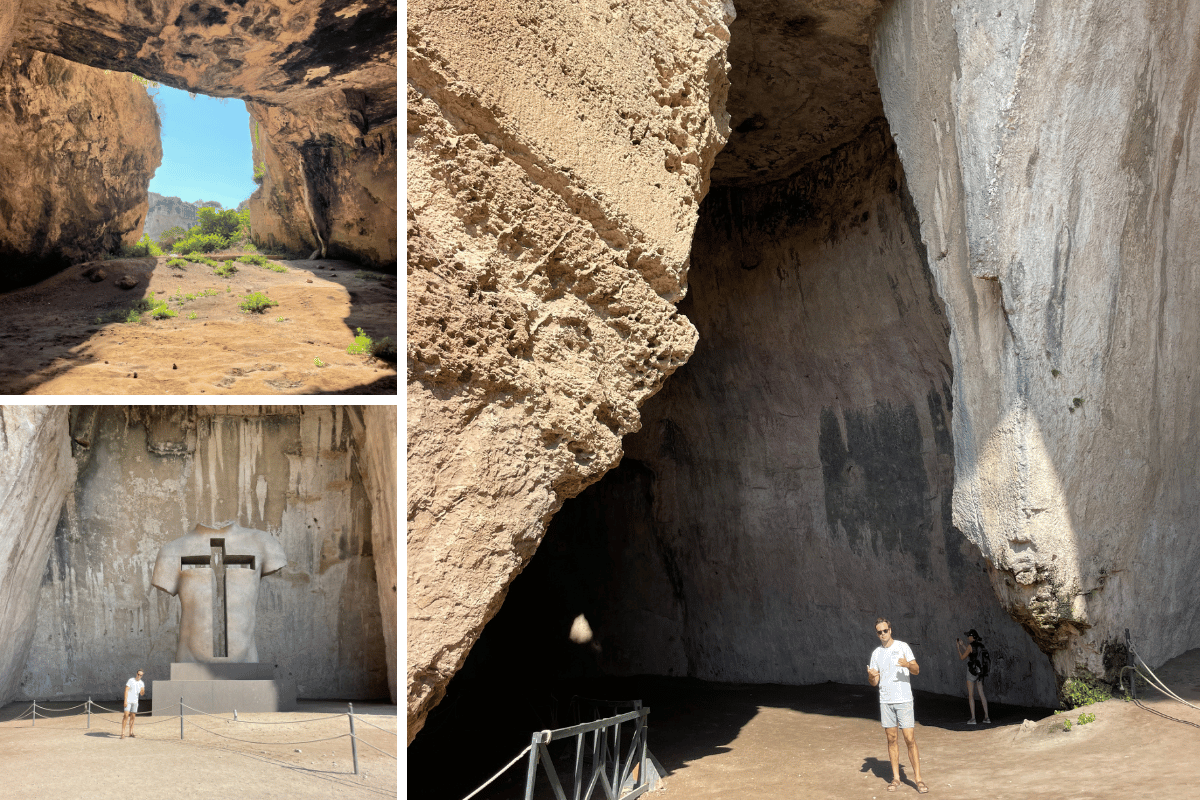
In the prolific years before he was killed by a tortoise that had been dropped by an eagle, the celebrated Athenian playwright Aeschylus visited the ancient Greek theater of Syracuse to stage “Women of Etna.” The play, performed there in 475 B.C., has been mostly lost to time, but much of the semicircular stone theater remains impressively intact and hosts performances to this day. Other marquee attractions in the Parco Archeologico della Neapolis are the eroded cliffs and otherworldly geological forms where the Greeks, Romans and others quarried stone. Particularly stunning is the Ear of Dionysus, a soaring jagged cavern on a cathedral scale that amplifies even the tiniest noises into eerie echoes.
Your historical odyssey culminates in the Museo Archeologico Regionale Paolo Orsi. All of the favorite Greco-Roman deities, heroes and creatures are there, in ceramic or sculptural form. Hercules drives chariots and fights lions on black-glazed pottery. A grinning satyr sails on a bloated wineskin. The early Christian relics are no less impressive, notably the Sarcophagus of Adelphia, which was discovered in the nearby catacombs of St. Giovanni. Dating to the 4th century, the funerary masterwork is chiseled with 13 biblical scenes — including the temptation of Adam and Eve, and the wedding at Cana — in three-dimensional reliefs.
Get a bit loose at Divino Mare, a simple and colourful seafood joint where many of those words are scrawled and re-scrawled every day on the chalkboard menu. Using the daily catches from their neighbours, the friendly staff serves up fresh carpaccios, ceviches, seafood pastas, fried critters, grilled fish and whole baked undersea creatures.
And if orecchiette pasta with tender octopus chunks isn’t sufficiently filling, try the garganelli pasta with shrimp in a rich butter-truffle sauce. A two-course meal for two costs about 50 euros.
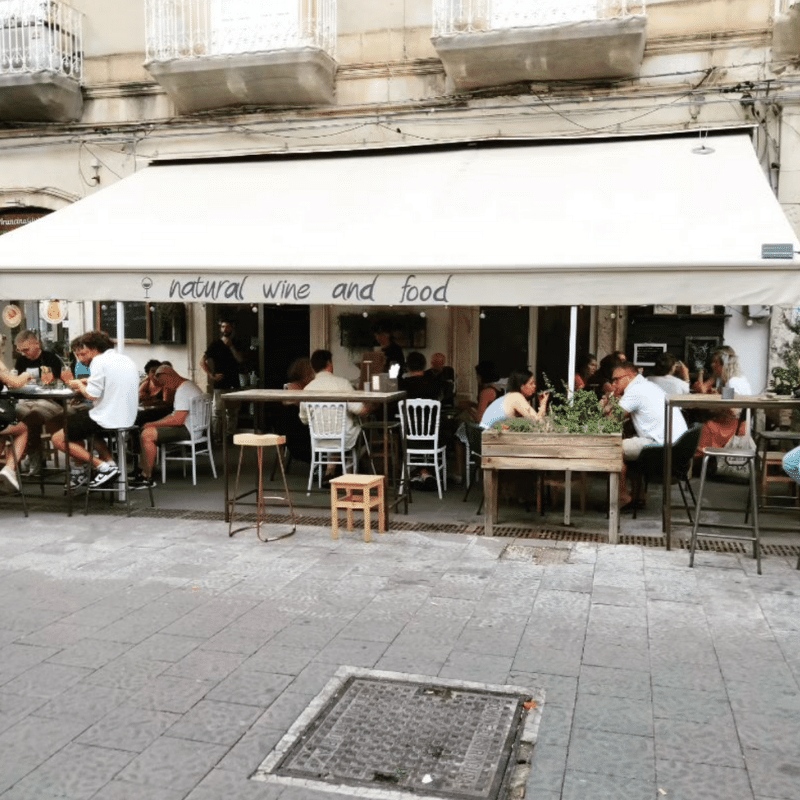
But more importantly – wine, wine and natural wine.
On the peninsula / Island Ortiga, but you can easily stay on the mainland and walk over. Be mindful that on Ortiga you cannot park, it’s super frustrating. But heaps of safe places to park a bit of a walk away.